Three times a year, on Pesach, Shavuos, and Sukkos, every Yid was oleh regel to Yerushalayim. The road they walked has been dug up. The breicha where they were toivel is uncovered. The steps they climbed to reach the sha'arei Har HaBayis are still there, two thousand years later.
The Pilgrimage Road
Early 3800s 📍 Ir David, YerushalayimA 600-meter-long, 8-meter-wide stepped stone street running from the Breichas HaShiloach at the southern end of Ir David to the southern sha'arim of Har HaBayis.
Based on coins found under the paving stones, the road was likely finished around the year 3790. It was the main road for the hundreds of thousands of olei regel who came to Yerushalayim for the Shalosh Regalim.

The steps alternate between narrow and deep treads, a deliberate design that slowed the olei regel down, building a sense of yir'ah as they went up toward the Beis HaMikdash. Along the road they found hundreds of ancient coins, measuring tables used for business, stone keilim, and remains of shops that served the olei regel.
The Breichas HaShiloach (Pool of Shiloach)
Late Bayis Sheini tekufah 📍 Southern end of Ir David, YerushalayimIn 5764, workers putting in a new sewer line hit stone steps that turned out to be part of a massive breicha, roughly 180 by 164 feet, with broad staircases on all sides. It was identified as the Breichas HaShiloach mentioned in Chazal's descriptions of the aliyah l'regel.

Olei regel would be toivel here before beginning their aliyah along the Pilgrimage Road toward Har HaBayis. The pool was fed by water channeled from the Ma'ayan HaGichon through Nikkvas Chizkiyahu. A paved walkway with a royal stoa ran alongside it.
Chazal describe pilgrim caravans passing by the Breichas HaShiloach as part of the derech ha'aliyah. The breicha, the road, and the southern sha'arim of Har HaBayis form one continuous path, the same derech our Avos walked every Yom Tov.
Mikvaos of Yerushalayim
Hasmonean through Herodian tekufos (c. years 3560–3830) 📍 Throughout Yerushalayim: Ophel, Ir David, Upper CityBefore going up to the Beis HaMikdash, every oleh regel was toivel. Diggers found about 40 mikvaos right at the southern approach to Har HaBayis, clustered at the base of the steps, exactly where olei regel would have used them before going up to be makriv their korbanos.
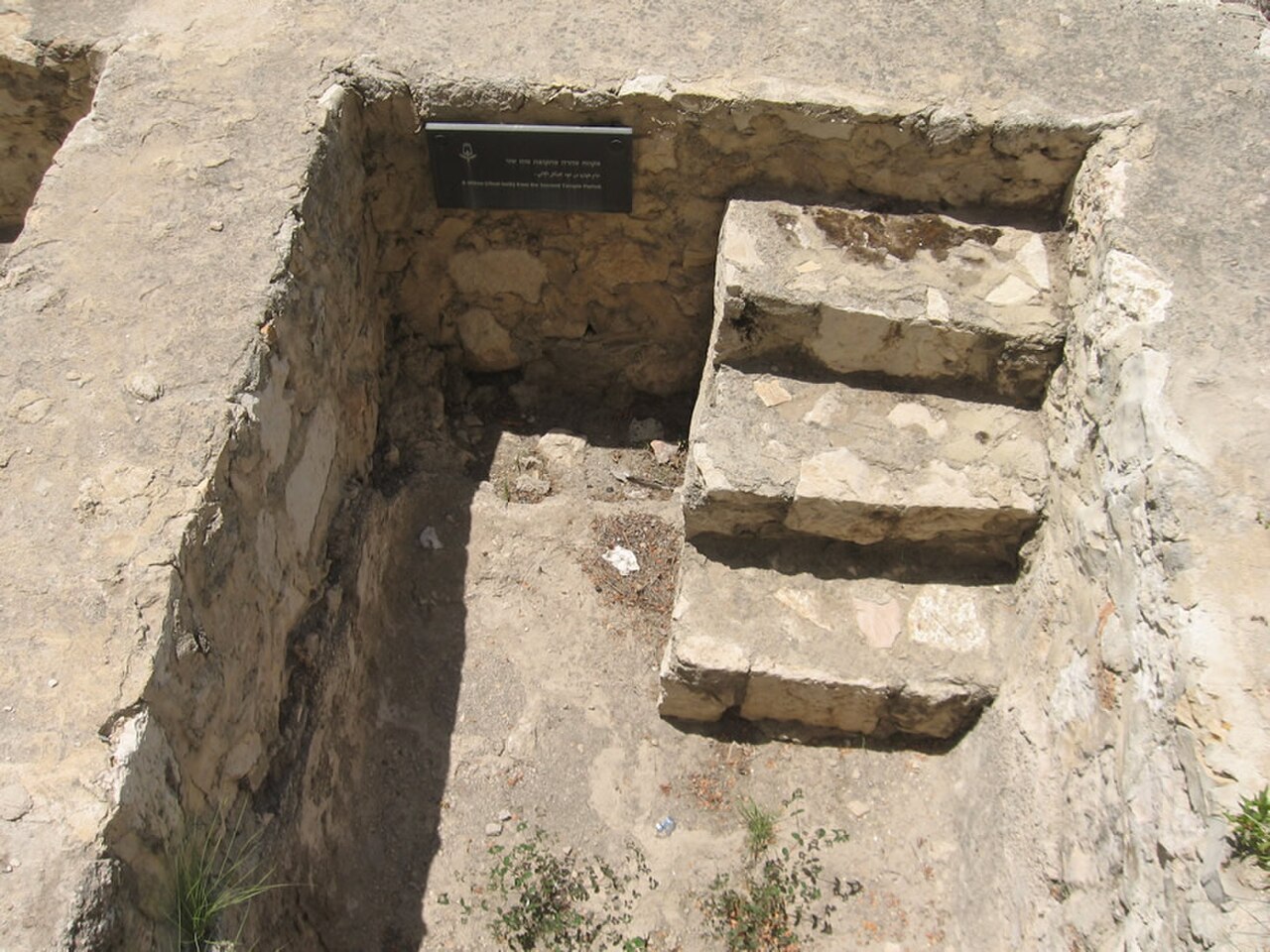
Another dig uncovered some 60 mikvaos in the homes of mishpachos of Kohanim in the Upper City. In total, about 300 mikvaos from the Bayis Sheini tekufah have been found across Yerushalayim and surrounding sites, including at Metzada, the Herodium, and Hurdus's winter palace at Yericho.
Many have staircases divided by a low wall, one side for going down b'tumah, the other for coming up b'taharah, exactly as described in the halachic sources. Taharah was part of the whole fabric of daily life.
The "Korban" Inscription
Bayis Sheini tekufah 📍 Southwestern corner of Har HaBayis, YerushalayimA broken handle of a limestone kli was found at the southwestern corner of Har HaBayis. Inscribed on the handle is the word "korban" (קרבן), with two upside-down birds underneath, torim or bnei yonah, the kind that were brought as korbanos in the Beis HaMikdash.
The Mishnah specifically mentions korbanos-keilim marked with the word "korban." This handle, with its carved word and two inverted birds, is a window into the avodas hakorbanos that our Avos were part of every time they came to Yerushalayim for Pesach.
The Trumpeting Place Inscription
Late 3700s – year 3830 📍 Israel Museum, YerushalayimFound at the base of the southwestern corner of Har HaBayis, this carved stone has an inscription in loshon hakodesh: "L'beis hateki'ah l'hach..." ("To the place of trumpeting, to procl[aim]..."). The stone fell from the top of Har HaBayis during the churban in the year 3830.

This stone marked the spot where a Kohen stood to blow the shofar, announcing hachnasas Shabbos and hachnasas Yom Tov, including hachnasas Pesach. The Mishnah (Sukkah 5:5) describes this. The stone was found lying exactly where it landed after it fell during the churban.
The Beit Horon Pilgrimage Road
Bayis Sheini tekufah or earlier 📍 Ma'aleh Beit Horon, ~10 miles NW of YerushalayimDiggers identified a stone road at the Ma'aleh Beit Horon, about 10 miles northwest of Yerushalayim, that they believe was used by olei regel on their way to the Beis HaMikdash. The road consists of curved rock-cut steps about 5.5 feet wide.
Running alongside this modest pilgrim road is a Roman imperial highway more than double its width, both leading to Yerushalayim. The narrower road, with its carved steps, was not a Roman construction but looks like it was built specifically for olei regel going up to the Ir HaKodesh on foot. Ancient sources describe how throngs of Yidden would go up these drachim to Yerushalayim for the Regalim, singing and playing music the whole way.
The Theodotos Inscription
Late 3700s 📍 Israel Museum, Yerushalayim
This Greek inscription, found in Ir David, records the only beis haknesses in Yerushalayim from the Bayis Sheini tekufah that we can point to by name. Theodotos son of Vettenos, a Kohen and rosh haknesses, built it "for the reading of the Torah and the teaching of the mitzvos, and the guest house and the rooms and the water installations for the lodging of those who need it from abroad."
A beis haknesses in Yerushalayim with rooms and water for olei regel coming from the golah. The hachnosas orchim setup that received Yidden when they arrived for Pesach from across the ancient world.